
If you’ve ever crushed a loaf of bread with a straight edged knife and thought, there has to be a better way, you’re already close to the answer. So—what is a serrated knife used for, exactly?
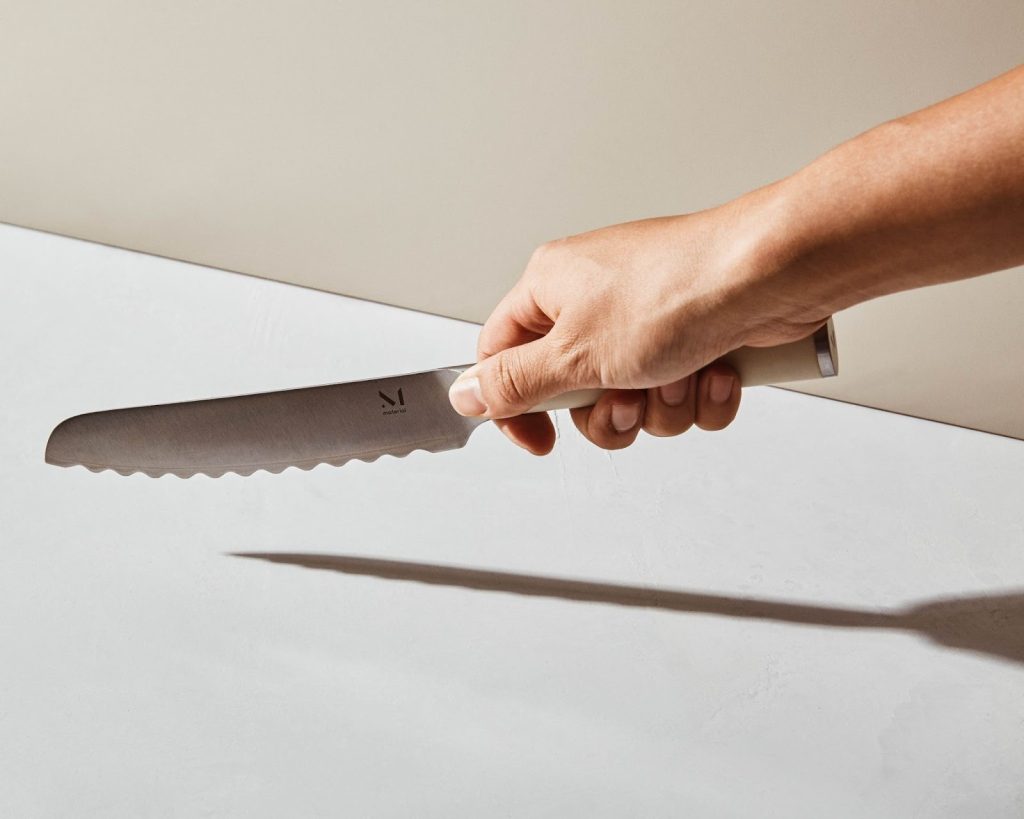
A serrated knife is designed to cut foods with tough exteriors and soft interiors. Instead of relying on one smooth cutting edge, serrated blades use a row of small, pointed teeth to grip and tear through food as you slice. In the kitchen, that makes serrated knives especially good for baked goods, certain fruits and vegetables, and any food that resists a clean cut from a traditional blade.
They’re not flashy. They’re not delicate. But they’re very good at what they do. And yeah—they’re pretty cool, idk.
A Brief History of Serrated Knives
Humans figured out serration a long time ago. Long before modern kitchen knives existed, people noticed that jagged edges cut fibrous materials more effectively than smooth ones. The concept carried over into tools, weapons, and eventually—kitchen knives.
Serrated knives became especially popular alongside bread baking. As crusty loaves and baked goods became more common, straight blades struggled to produce a clean cut without crushing the interior. The solution was simple: add teeth.
Today, serrated knives are a staple in knife sets and professional kitchens alike, often taking the form of bread knives or serrated steak knives.
What Is the Purpose of a Serrated Knife?
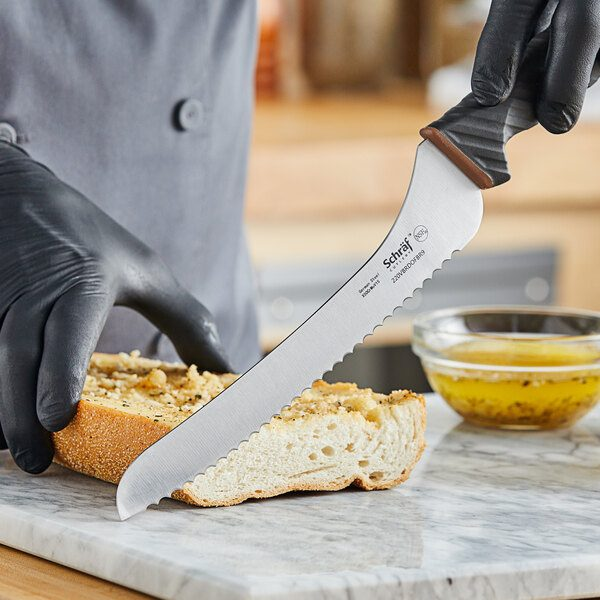
The purpose of a serrated knife is grip and control. Those pointed edges bite into food, allowing the blade to saw through tough surfaces while preserving what’s inside.
Serrated knives are best when:
- The exterior is hard or slippery
- The interior is soft or delicate
- A clean cut matters more than precision
This is why a serrated blade often outperforms a chef’s knife serrated hybrid or utility knife in very specific situations.
What Is a Serrated Knife Good For?
If you’re wondering what is a serrated knife good for, here are the most common uses:
- Slicing bread without crushing it
- Cutting tomatoes and soft fruits
- Working through citrus skins
- Handling baked goods with crusts
- Serving cooked meats at the table
In other words, serrated knives shine where straight edged knives struggle.
Serrated Knife vs. Straight Edge Knife
Straight edged knives, like a chef’s knife or paring knife, excel at precision and clean slicing on a cutting board. Serrated knives rely on motion—specifically a back-and-forth sawing action.
Neither is better universally. They’re tools for different jobs. Many kitchens benefit from having both.
If you’re comparing options, our guides to the chef’s knife and paring knives break down where smooth blades dominate.
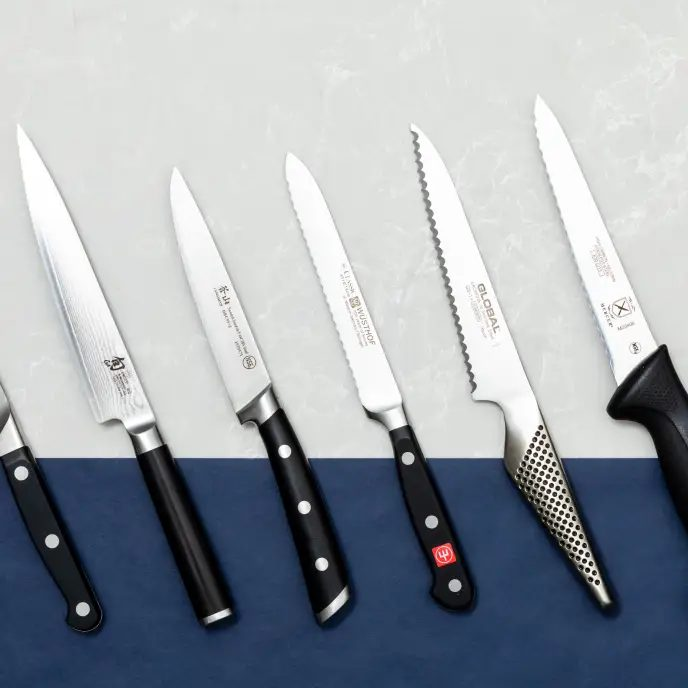
7 Popular Types of Serrated Knives
Not all serrated knives are the same. Here are the most common variations you’ll see in kitchens.
1. Bread Knife
The most recognizable serrated knife.
Uses:
Slicing bread, baguettes, rolls, and baked goods.
Pros:
- Long blade
- Excellent clean cut through crusts
- Protects soft interiors
Cons:
- Limited use beyond bread
2. Serrated Utility Knife
A smaller, more flexible option.
Uses:
Fruits and vegetables, sandwiches, quick prep.
Pros:
- Easy to handle
- Versatile size
Cons:
- Not ideal for large loaves
3. Serrated Steak Knives
Designed for the table, not prep.
Uses:
Cutting cooked meats during meals.
Pros:
- Sharp pointed edges
- Clean cuts without tearing
Cons:
- Not suitable for cutting board work
4. Offset Serrated Knife
Often used by bakers.
Uses:
Layered cakes, delicate foods, pastries.
Pros:
- Knuckle clearance
- Smooth control
Cons:
- Highly specialized
5. Tomato Knife
A short serrated blade with a pointed tip.
Uses:
Tomatoes, soft fruits, thin slicing.
Pros:
- Excellent control
- Prevents crushing
Cons:
- Narrow application
6. Long Serrated Slicer
A hybrid between bread knife and slicer.
Uses:
Large roasts, cakes, wide baked goods.
Pros:
- Length allows even strokes
- Clean presentation cuts
Cons:
- Requires storage space
7. Specialty Serrated Blades
Includes knives with unique tooth shapes or a high number of serrations.
Uses:
Specific foods or tasks depending on design.
Pros:
- Optimized performance
Cons:
- Not general-purpose
Pros and Cons of Serrated Knives
Pros
- Excellent for tough exteriors
- Require less downward force
- Stay sharp longer than straight blades
Cons
- Harder to sharpen
- Less precise than smooth edges
- Limited versatility
A good serrated knife isn’t an everyday tool—but when you need it, nothing else works quite the same.
How to Care for a Serrated Knife
Serrated blades need slightly different care than straight knives.
- Use wood or rubber cutting boards
- Avoid glass or stone surfaces
- Clean and dry after use
- Store safely to protect the teeth
Sharpening is possible, but it usually requires a specialized sharpening stone or professional service. Because only the edges of the serrations are sharpened, they tend to hold their sharpness for a long time.
Where Serrated Knives Fit in Your Kitchen
Most home cooks don’t need multiple serrated knives. One good serrated knife, usually a bread knife, covers most needs. Everything else is optional and task-driven.
If you’re building out your collection, seeing how serrated knives fit alongside chef’s knives and cleavers helps put things into perspective. Our full knife guide shows how all kitchen knives work together.
Final Thoughts
So, what is a serrated knife used for? It’s used when grip matters more than finesse, when surfaces resist clean cuts, and when delicate interiors need protection.
Serrated knives aren’t flashy. They don’t replace your main knife. But in the right moment, they’re exactly what you want in your hand.
Curious how serrated knives compare to everything else?
Oooh, go to the master knife guide and see where they fit in your kitchen lineup. 🔪