
You’re wondering how to hold a chef knife? It’s simple—but it matters more than most people realize.
The way you grip your knife directly affects your control, precision, and safety. Hold it correctly, and cooking feels smooth and confident. Hold it wrong, and you’re far more likely to slip, struggle, or even injure yourself.
For beginners, this is one of the fastest ways to improve in the kitchen. It’s not about fancy techniques or complicated recipes—it’s about building the right foundation. And learning how to hold a chef knife is where that starts.
Why Proper Knife Grip Matters (More Than You Think)
A lot of new cooks underestimate this.
They focus on recipes, ingredients, or cookware—but ignore the one thing they’re using constantly: the knife in their hand.
Here’s the reality:
A poor grip doesn’t just make cutting harder—it makes it dangerous.
When your grip is off:
- The blade can twist mid-cut
- Your slices become uneven and unpredictable
- You’re more likely to lose control under pressure
- Small slips turn into serious injuries
And it’s not just about safety. A bad grip slows you down. It forces you to fight the knife instead of working with it.
A proper grip, on the other hand:
- Gives you direct control over the blade
- Makes cutting feel smoother and more natural
- Helps you build confidence quickly
- Reduces fatigue during longer prep sessions
If you’re trying to learn how to use a chef knife, this is step one—and it affects everything that comes after.
The Gold Standard: The Pinch Grip
If there’s one technique to learn, it’s this:
The pinch grip is the correct way to hold a chef knife.
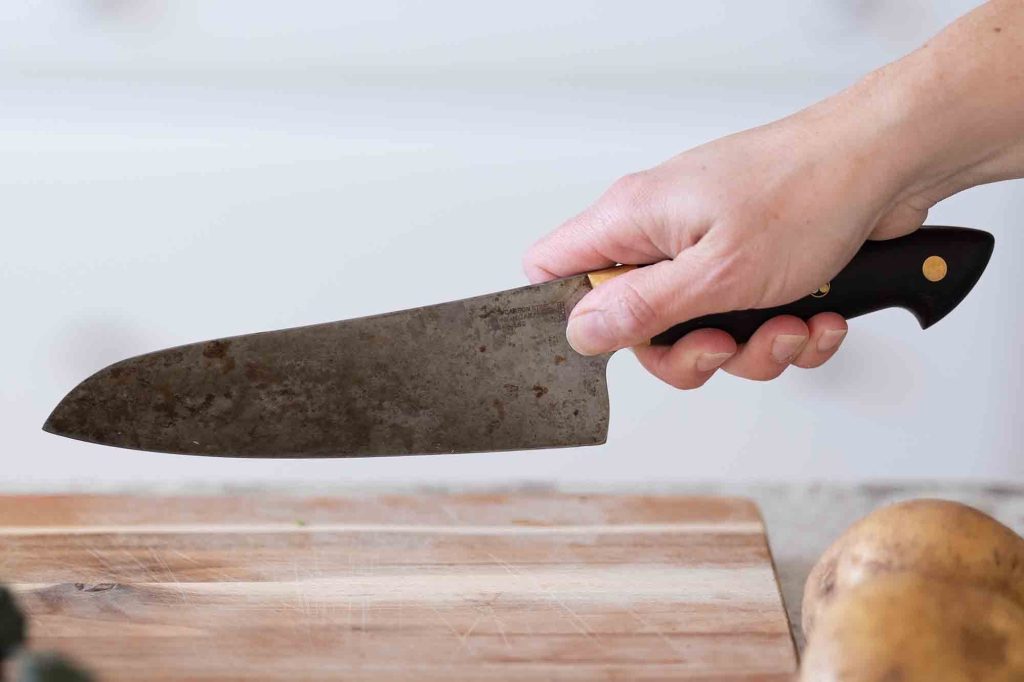
This is the grip used by professional chefs because it offers the best combination of control, balance, and safety.
What Is the Pinch Grip?
Instead of holding the knife only by the handle, you “pinch” the blade itself.
Here’s how:
- Place your thumb on one side of the blade, right where it meets the handle
- Place your index finger on the opposite side
- Wrap your remaining three fingers around the handle
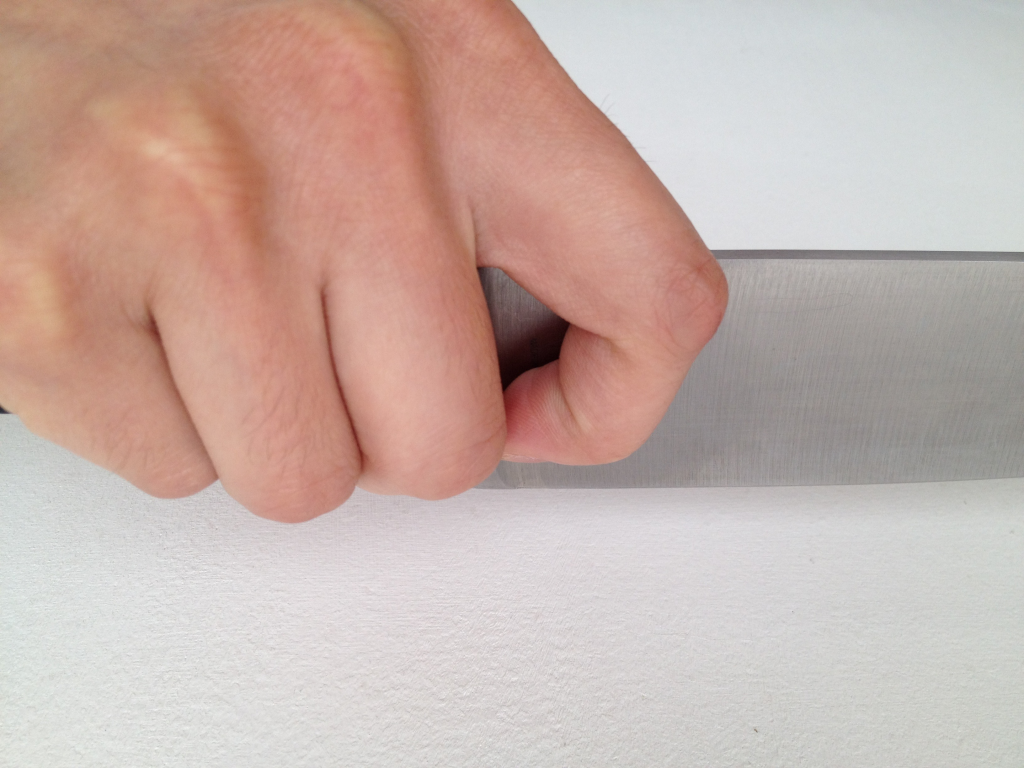
That’s the entire concept. It’s simple—but incredibly powerful.
Why the Pinch Grip Works So Well
At first, this grip might feel unusual. That’s because most people aren’t used to touching the blade.
But there’s a reason professionals use it:
1. You’re Closer to the Blade
By moving your grip forward, you gain more direct control over the knife’s movement.
2. Better Balance
Instead of holding all the weight in the handle, you distribute it more evenly.
3. Increased Precision
Small movements become easier to control, which is essential for consistent cuts.
4. Safer Cutting
More control means fewer slips—and fewer accidents.
When people ask how to hold a chef knife properly, this is the difference between guessing and knowing.
The Most Common Mistake: The Handle Grip
Let’s talk about what most beginners do instead.
They grab the knife like this:
- All fingers wrapped around the handle
- Sometimes with the index finger extended along the top of the blade
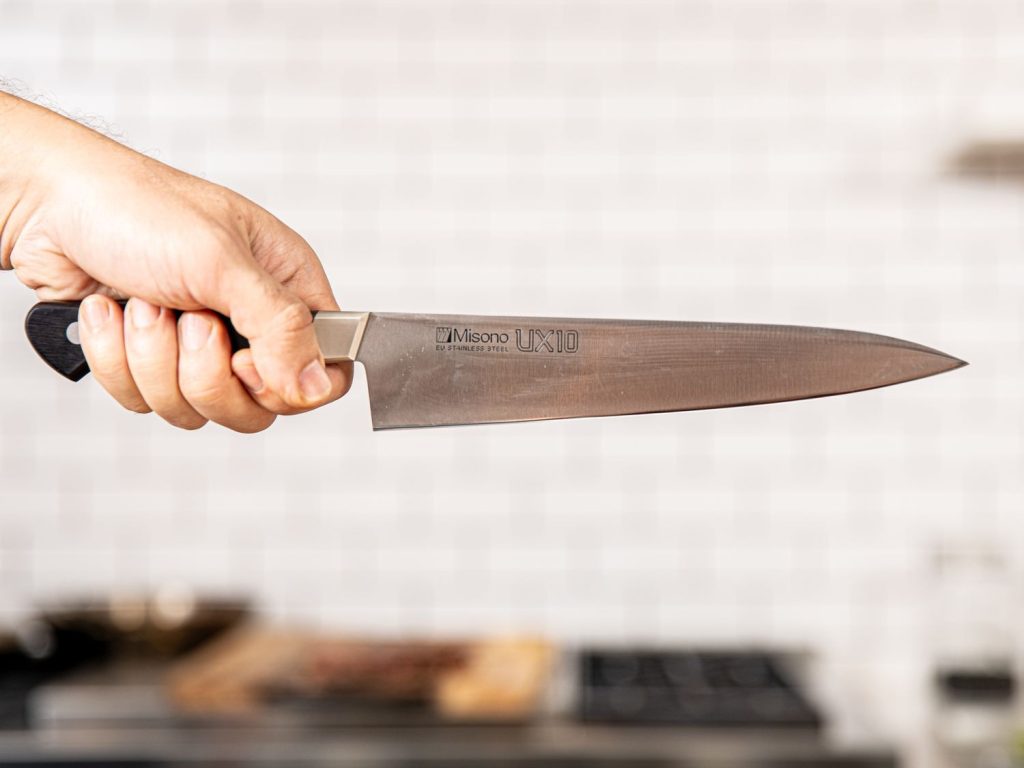
This is known as the handle grip.
Why It Feels Right (But Isn’t)
The handle grip feels natural because it’s how we hold most tools.
But knives aren’t like other tools.
The Problems With This Grip
- Reduced control: Your hand is farther from the blade
- More wobble: The knife can pivot more easily
- Less precision: Fine cuts become harder
- Higher injury risk: Especially when cutting dense foods
Extending your index finger along the spine might feel like it adds control—but it actually does the opposite.
If you’re learning how to hold chef knife safely, this is one of the first habits to fix.
Step-by-Step: How to Hold a Chef Knife Correctly
Let’s simplify it into a repeatable process.
Step 1: Position Your Fingers on the Blade
Pinch the blade lightly between your thumb and index finger.
Step 2: Secure the Handle
Wrap your remaining fingers around the handle for support.
Step 3: Relax Your Grip
You don’t need to squeeze. A relaxed grip gives you better control.
Step 4: Align Your Wrist
Keep your wrist straight and natural.
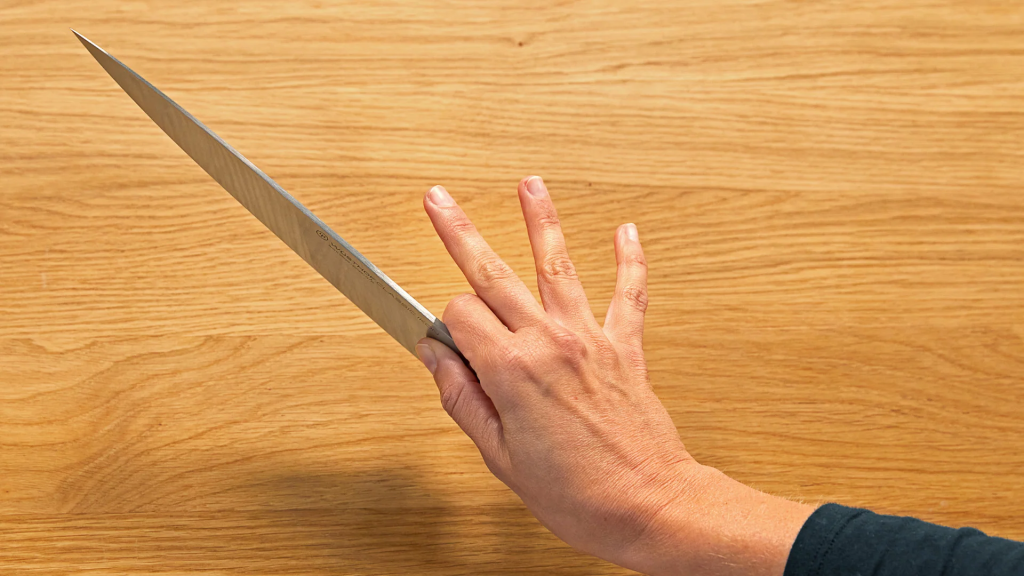
Practice this a few times without cutting anything. Build the habit before you add movement.
What Your Other Hand Should Be Doing
Your knife hand gets most of the attention—but your other hand is just as important.
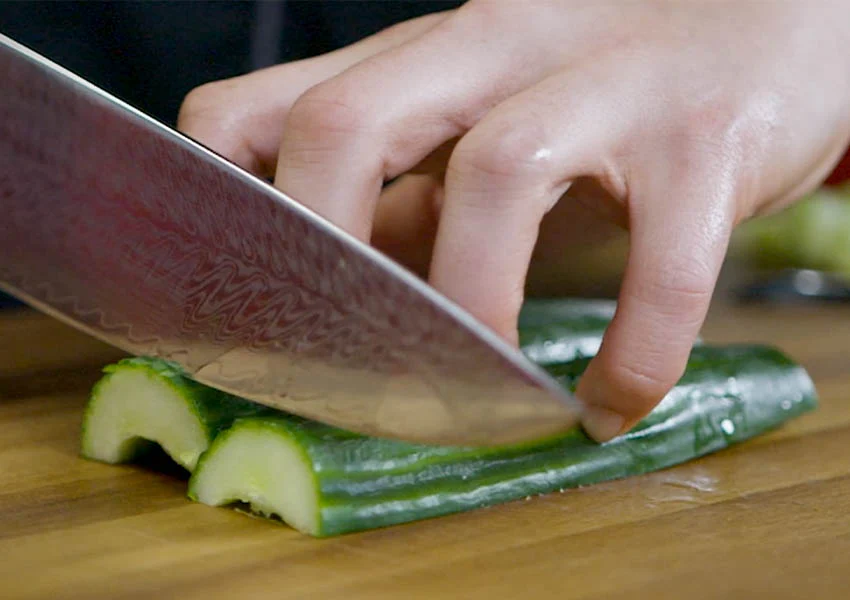
The Claw Grip
- Curl your fingertips inward
- Keep your knuckles facing the blade
- Let the knife rest lightly against your knuckles as a guide
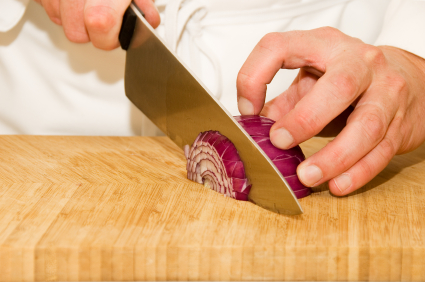
Why This Matters
- Protects your fingertips
- Keeps your cuts consistent
- Works perfectly with the pinch grip
When combined, these two grips create a system that makes cooking safer and more efficient.
How This Grip Translates Across Different Knives
Once you understand how to hold a chef knife, you’re not just learning one skill—you’re learning a foundation that applies across almost every knife in your kitchen.
Let’s break that down.
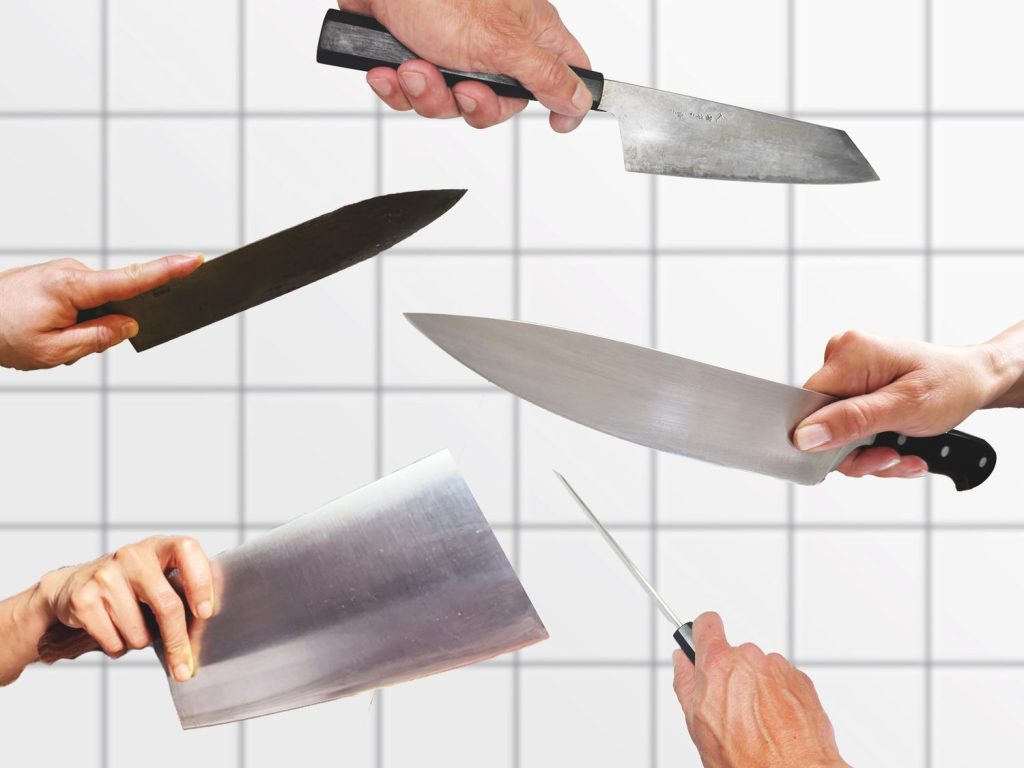
Chef Knife
This is where the pinch grip shines.
The design of a chef knife—its balance, blade length, and shape—is built for this grip. You’ll use it for:
- Chopping vegetables
- Slicing proteins
- Rocking cuts
This is your primary tool, and the pinch grip is its natural pairing.
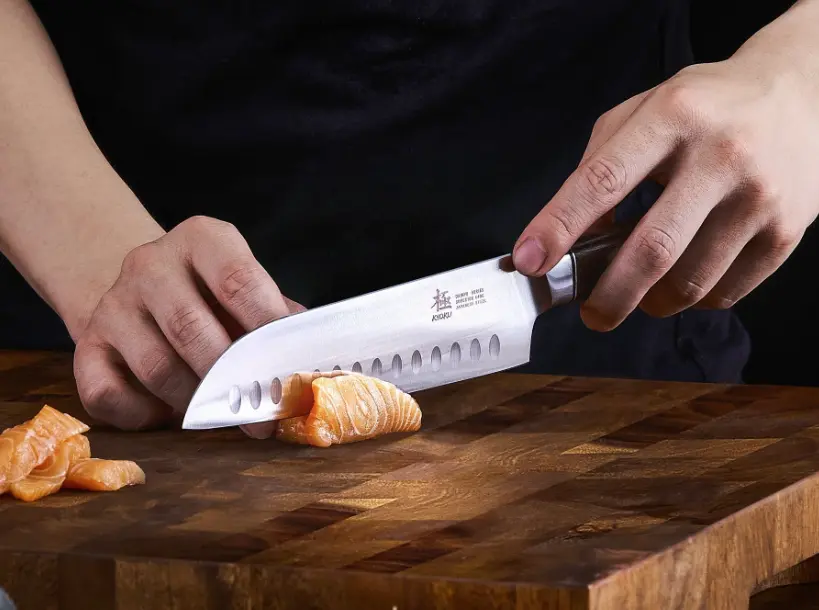
Santoku Knife
A Santoku is slightly shorter and flatter than a chef knife.
Good news: the same grip applies.
You’ll still use a pinch grip, but your motion may be more straight up-and-down slicing rather than rocking.
Paring Knife
Here’s where things change slightly.
Paring knives are smaller and often used for:
- Peeling
- Trimming
- In-hand cutting
Because of this, you may:
- Use a modified pinch grip for board work
- Use a handle grip when cutting in your hand (for control in tight spaces)
The key is understanding why the grip changes—not just copying motions.
Bread Knife
Bread knives have long, serrated blades.
You can still use a pinch grip—but many people shift slightly back on the handle for leverage during sawing motions.
The principle remains the same:
control the blade as much as possible.
Utility Knife
Think of this as a smaller chef knife.
Use the pinch grip here as well—it translates almost perfectly.
Takeaway
Learning how to hold a chef knife isn’t just about one knife.
It teaches you:
- Where control comes from
- How balance affects cutting
- When to adjust your grip based on the task
For a deeper breakdown of different knives and how they’re used, check out what is a chef knife.
Adapting Your Grip for Different Cutting Styles
Grip and motion go hand in hand.
Once you’ve got the pinch grip down, here’s how it supports different techniques:
Rocking Motion
- Common with chef knives
- Tip stays on the board
- Handle moves up and down
Push Cutting
- Knife moves forward and down
- Great for clean, precise slices
Pull Cutting
- Knife moves backward through the food
- Useful for delicate ingredients
Your grip stays mostly the same—but your control improves dramatically.
Common Mistakes (Even After You Learn the Right Grip)
Even when people understand how to hold a chef knife, they still fall into bad habits.
Here’s what to watch for:
Gripping Too Tight
Tension reduces control and increases fatigue.
Letting Fingers Drift
Your pinch grip should stay consistent—not slide back onto the handle.
Ignoring Your Off-Hand
An unsafe guiding hand cancels out a good knife grip.
Rushing
Speed comes later. Focus on control first.
How to Practice (Without Risk)
You don’t need to jump straight into fast chopping.
Start simple:
- Practice holding the knife correctly without cutting
- Slice soft foods like cucumbers or zucchini
- Focus on consistency, not speed
Repetition builds muscle memory—and that’s what turns technique into habit.
The Role of Knife Quality
Grip matters—but your knife still plays a role.
A well-designed knife:
- Feels balanced in your hand
- Supports a natural pinch grip
- Requires less force to cut
A dull or poorly balanced knife forces you to compensate—and that’s when technique breaks down.
If you’re trying to improve how to use a chef knife, don’t ignore the tool itself.
Safety Isn’t Optional
It’s worth repeating:
Improper grip can lead to injury.
Not eventually—immediately.
Most kitchen accidents happen because:
- The knife slipped
- The user lost control
- The grip wasn’t stable
This isn’t about fear—it’s about awareness.
When you learn how to hold a chef knife correctly, you’re actively reducing risk every time you cook.
Building Confidence Over Time
At first, the pinch grip might feel unfamiliar.
That’s normal.
But after a few sessions, something clicks:
- Your cuts become smoother
- Your movements feel more controlled
- You stop thinking about your grip altogether
That’s when you know it’s working.
Expanding Your Knife Skills
Once you’ve mastered your grip, everything else becomes easier:
- Chopping techniques
- Slicing consistency
- Speed and efficiency
If you’re continuing to build your knife skills, you might also find this helpful:
how to close a pocket knife
Different tool—but the same focus on control and safety.
Final Thoughts: Start With the Right Grip
Learning how to hold a chef knife is one of the simplest upgrades you can make—but it has one of the biggest impacts.
It affects:
- Your safety
- Your confidence
- Your overall cooking ability
And the best part? It takes just a few minutes to learn.
If you’re serious about improving in the kitchen, start here.
For more knife skills, techniques, and beginner-friendly guidance, visit the knife guide.
Because once you truly understand how to hold a chef knife, everything else in cooking starts to fall into place.