
A santoku knife is a Japanese general purpose kitchen knife primarily used for slicing, dicing, and chopping vegetables, boneless meats, and fish. It excels at precision cutting and creating thin, even slices using a straight chopping motion rather than a rocking motion. Santoku knives are versatile, sharp, and ideal for home cooks who want clean, controlled cuts.
If you’re looking for your first proper kitchen knife and wondering what a santoku knife is used for, the answer is simple: it’s built to handle everyday prep work efficiently — as long as you use it for the tasks it was designed for.
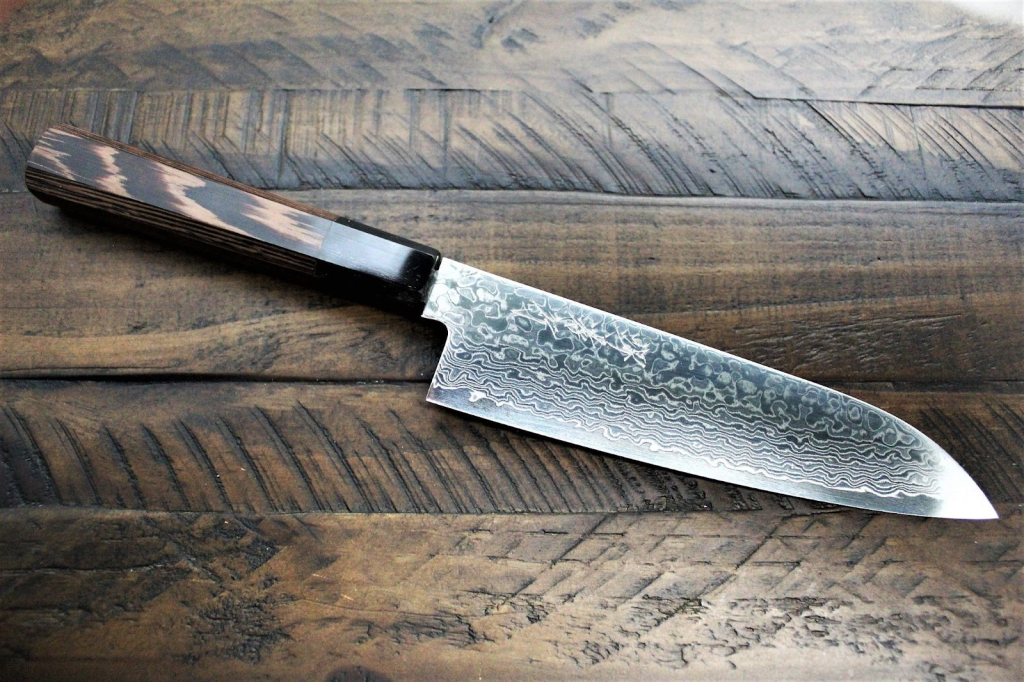
What Is a Santoku Knife?
Before diving deeper into what a santoku knife is good for, it helps to understand what it actually is.
The word “santoku” translates to “three virtues” or “three uses.” These refer to its ability to handle:
- Meat
- Fish
- Vegetables
Unlike a traditional Western chef’s knife, santoku blades typically have:
- A shorter length (usually 5–7 inches)
- A wide blade for scooping food
- A flatter cutting edge
- A double beveled edge
- Often a thinner profile
Most are made from stainless steel or high carbon steel, allowing for a sharp edge that holds up well under regular use. The design emphasizes control, precision cutting, and efficiency for home cooks.
A Brief History of the Santoku Knife
Santoku knives originated in Japan in the mid-20th century as kitchens began blending Japanese and Western cooking techniques. Traditional Japanese knives were often specialized for fish or vegetable preparation, while Western chef’s knives were more general purpose.
The santoku was developed as a purpose knife that could handle a wider range of ingredients without requiring multiple specialized blades. It quickly became popular among home cooks and professional chefs for its versatility and manageable size.
Today, santoku blades are common worldwide and are often found in knife block sets as a reliable everyday option.
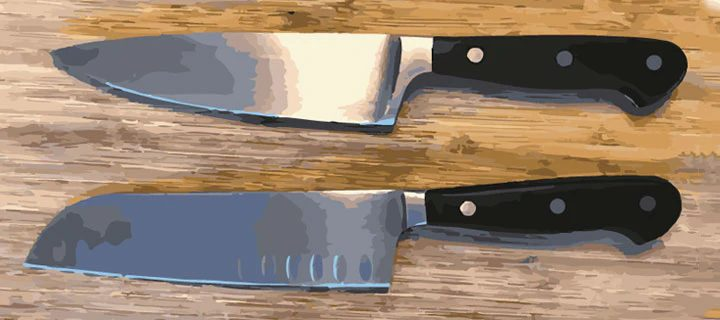
Santoku vs Chef’s Knife: What’s the Difference?
If you’re deciding between a santoku and a chef’s knife, understanding their differences will help you choose the right tool for the job.
| Feature | Santoku Knife | Chef’s Knife |
| Blade Shape | Flatter edge, rounded sheepsfoot tip | Curved edge, pointed tip |
| Cutting Style | Chopping motion | Rocking motion |
| Blade Length | Typically shorter (5–7 inches) | Longer (8–10 inches) |
| Thickness | Often thinner | Slightly thicker |
| Best For | Precision cutting, vegetables, boneless proteins | Larger prep tasks, versatile cutting |
A chef’s knife is often better for heavy-duty tasks and rocking cuts, while a santoku knife shines in controlled, straight downward cuts.
If you want a deeper breakdown of how a chef’s knife compares, you can read our full guide to the chef’s knife.
The Primary Use of a Santoku Knife
The main answer to “what is a santoku knife used for?” is this:
Vegetable preparation.
Santoku knives are excellent for:
- Dicing onions
- Slicing peppers
- Chopping herbs
- Cutting carrots
- Preparing mushrooms
- Creating thin slices of cucumbers or zucchini
The flat cutting edge makes full contact with the cutting board, which helps create clean cuts in a single downward motion. The wide blade also makes it easy to transfer chopped ingredients from the cutting board to the pan.
Because many santoku knives are thinner and lighter, they allow for precise, controlled cuts without fatigue during extended prep sessions.
Two Additional Uses
1. Slicing Boneless Meat
Santoku knives are very good at slicing chicken breasts, trimming fat, and cutting boneless cuts of beef or pork. The sharp edge allows for smooth, clean slices without tearing the meat.
However, this is strictly for boneless proteins. They are not designed for heavy joint work.
2. Preparing Fish
The thin profile and precision cutting ability make santoku blades useful for portioning fish fillets or slicing raw fish for dishes like poke or sushi-style preparations.
They create thin slices with minimal resistance — something thicker blades struggle with.
Why It Works So Well
Santoku knives perform well because of their design:
- Flat cutting edge: Ideal for chopping motion cuts.
- Thin blade profile: Reduces resistance and allows clean slices.
- Wide blade: Helps with food transfer and knuckle clearance.
- Double beveled edge: Makes it user-friendly for both right- and left-handed cooks.
- High-quality steel options: Stainless steel for corrosion resistance, high carbon steel for superior sharpness.
The combination makes it an efficient general purpose knife for daily prep.
But here’s the key: it works well only when used as intended.
What a Santoku Knife Is NOT Good For
Santoku knives are not built for heavy-duty tasks. Misusing them can chip the cutting edge or damage the blade.
Avoid using a santoku knife for:
- Cutting through bones
- Frozen food
- Hard squash or thick-skinned gourds
- Prying or twisting motions
- Splitting poultry joints
If you need to break down tougher ingredients, a cleaver or a heavier chef’s knife is more appropriate.
Santoku knives are great — but only if you use them right.
Cutting Techniques: How to Use It Properly
To get the most from a santoku knife:
- Use a straight chopping motion rather than a rocking motion.
- Keep the tip mostly on the board.
- Use smooth downward strokes.
- Avoid lateral twisting.
Because the blade is flatter than a chef’s knife, rocking can cause uneven contact with the cutting board and reduce efficiency.
How to Care for a Santoku Knife
To maintain a sharp edge and preserve high quality performance:
- Always use a wooden or plastic cutting board.
- Hand wash and dry immediately (even stainless steel benefits from this).
- Store it properly in a knife block or magnetic strip.
- Hone regularly to maintain the cutting edge.
If your santoku knife is made from high carbon steel, it may require extra care to prevent corrosion.
Proper maintenance ensures consistent precision cutting and extends the life of the blade.
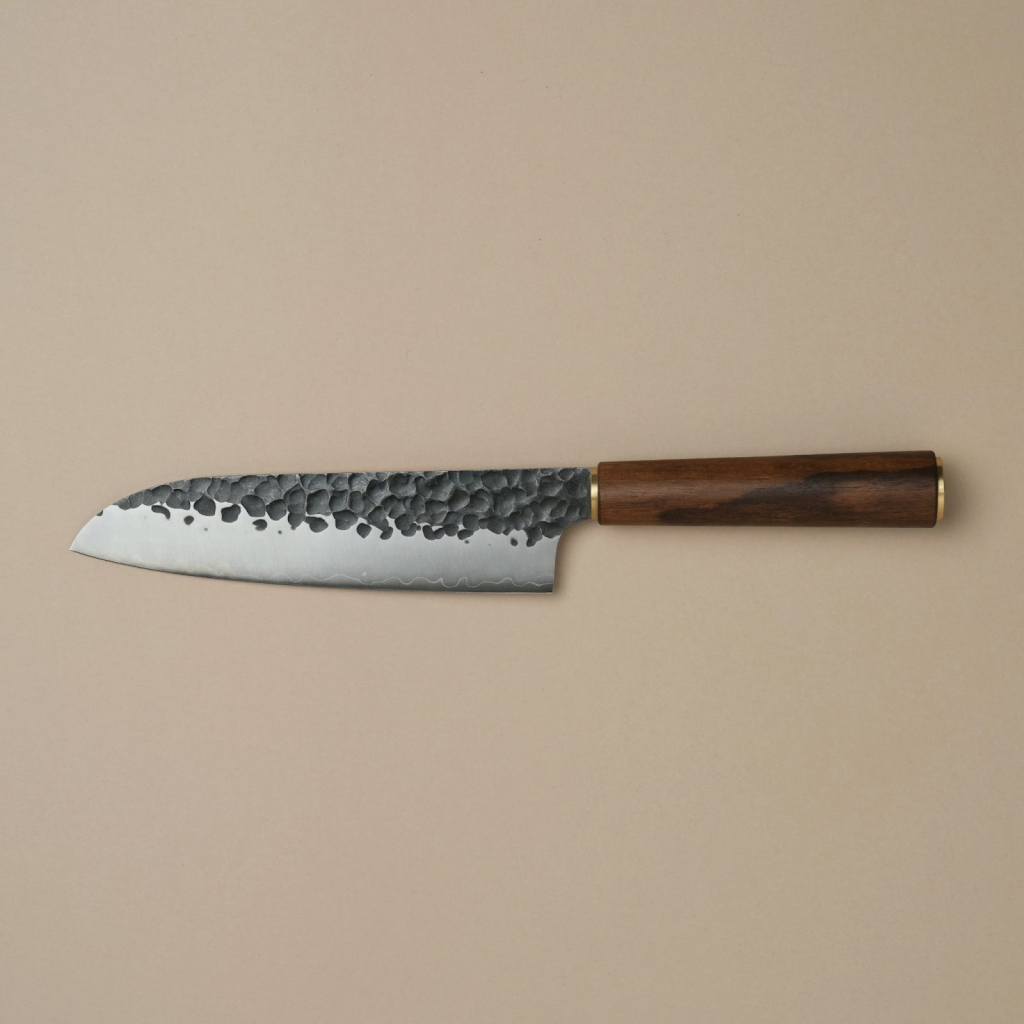
Is a Santoku Knife Right for You?
If your cooking involves a lot of vegetables, boneless meats, and fish — and you prefer controlled, precise cuts — a santoku knife is an excellent general purpose option.
It’s especially well suited for home cooks who want a reliable everyday blade without jumping straight into large, heavy knives.
The key takeaway: a santoku knife is good for what it was designed to do. Use it for slicing, dicing, and chopping — not for heavy-duty tasks — and it will serve you extremely well.
Not sure if a santoku knife is the right fit for your kitchen? Read our complete Ultimate Knife Choosing Guide to compare different blade types and find the best tool for the job.