
If you’re typing this into a search bar, chances are you’re not looking for a lecture—you just want a straight answer. So let’s start there: what is a curved knife?
A curved knife is any knife with a blade that arcs instead of staying straight. That curve can be subtle or dramatic, and it exists for one simple reason: control. Curved blades are designed to follow natural shapes, make smoother cuts, and reduce resistance when slicing, peeling, or trimming. In the kitchen, curved knives show up more often than you might realize.
Curved knives are cool. Here’s all you need to know.
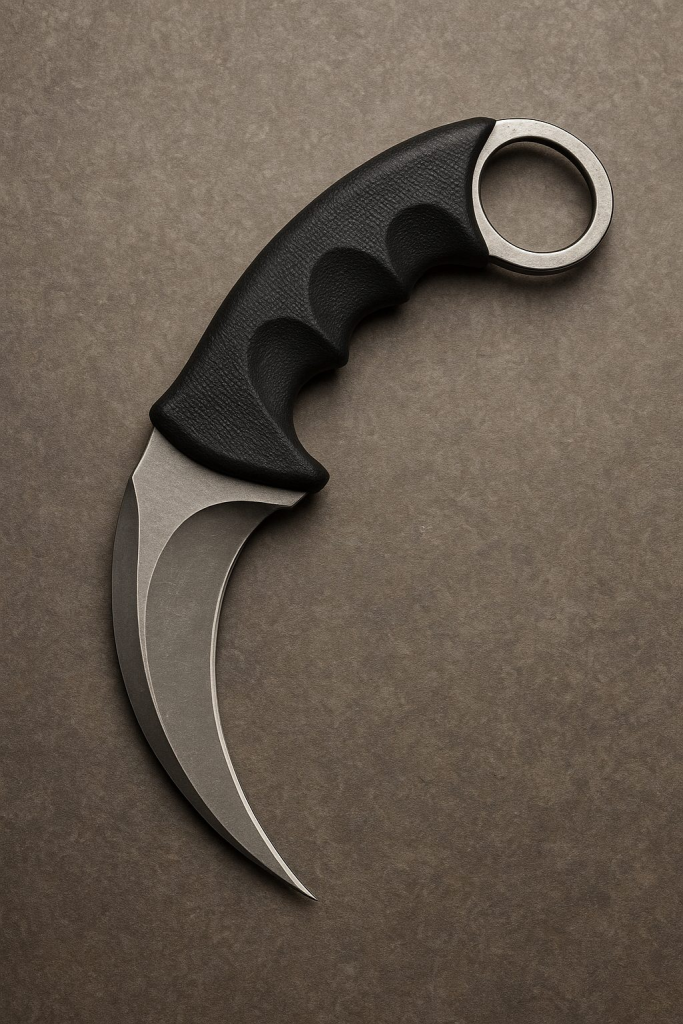
What Is a Curved Knife Used For?
Broadly speaking, what is a curved knife used for comes down to motion and ergonomics.
Curved blades are especially good at:
- Peeling fruit and vegetables
- Trimming rounded surfaces
- Making continuous slicing motions
- Working in-hand rather than on a cutting board
If you’ve ever peeled an apple or orange and noticed how the blade naturally follows the shape, that’s the curve doing its job.
So if you’re asking what is a knife with a curved blade used for, the answer is this: tasks where straight blades feel awkward or inefficient.
A Brief History of Curved Knives
Curved knives didn’t start in modern kitchens. Early curved blades appeared in farming, hunting, and food preparation because they matched how people actually worked with their hands.
As cooking tools evolved, that same idea carried over into kitchen knives. Certain jobs—like peeling, trimming, or fine control work—benefited from a blade that moved with the food instead of fighting it.
Over time, curved knives became more specialized. Some stayed small and precise. Others grew larger and more dramatic. Today, curved knives exist across many categories, each designed for a specific purpose.
What Is a Curved Kitchen Knife?
A curved kitchen knife isn’t one single knife—it’s a family of knives that share a curved blade shape.
Some curves are gentle, like on a chef’s knife. Others are pronounced, like peeling knives or specialty blades. What they all have in common is that the curve improves efficiency for specific cutting motions.
Below are the most common curved knives you’ll actually encounter.
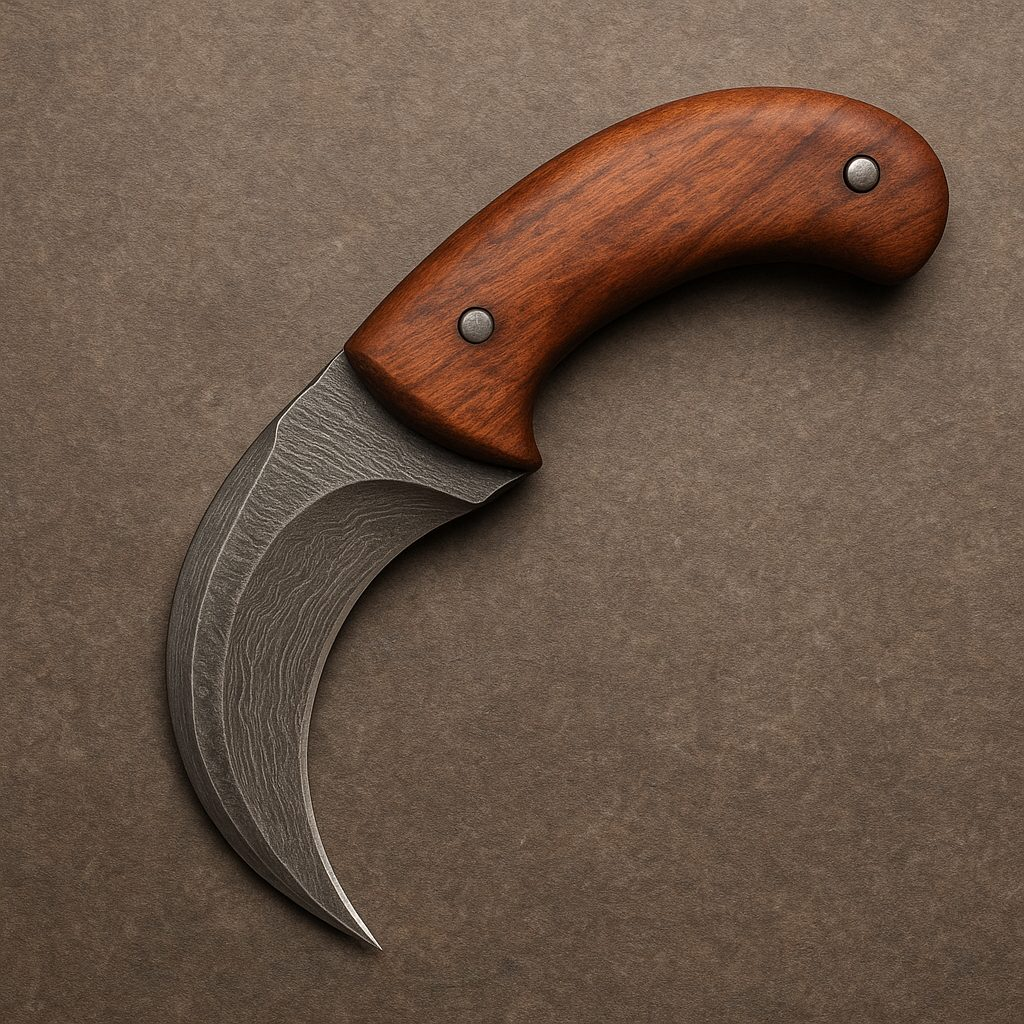
5 Common Types of Curved Knives (and What They’re Good For)
1. Paring Knife (Curved Edge)
Many paring knives feature a slight curve toward the tip.
Pros
- Excellent control
- Ideal for peeling and trimming
- Easy to use in-hand
Cons
- Too small for large prep work
Best for: Fruit, vegetables, and detail work.
If you want to go deeper, we break this down fully in our guide to the paring knife.
2. Bird’s Beak (Peeling Knife)
This knife has a very pronounced curve, almost hook-like in shape.
Pros
- Follows round surfaces perfectly
- Extremely precise
- Reduces wasted food
Cons
- Highly specialized
- Not versatile
Best for: Peeling apples, citrus, potatoes, and decorative work.
This is often what people mean when they picture a curved knife.
3. Chef’s Knife (Curved Profile)
While not extreme, most chef’s knives have a curved blade profile.
Pros
- Enables rocking motion
- Smooth slicing action
- Highly versatile
Cons
- Curve isn’t ideal for all cutting styles
Best for: General kitchen prep.
This gentle curve is why chef’s knives feel natural to use for so many tasks.
4. Curved Utility Knife
A mid-sized knife with a noticeable arc.
Pros
- Easier handling than large knives
- Good balance of control and reach
Cons
- Can overlap with other knives
Best for: Quick prep, fruit, and small vegetables.
5. Specialty Curved Knives
This category includes knives designed for very specific tasks.
Examples include:
- Citrus knives
- Garnishing knives
- Certain regional or traditional blades
Pros
- Optimized for one job
- Very efficient in the right hands
Cons
- Limited use outside that task
Curved Knife vs. Straight Blade Knife
Straight blades excel at clean, vertical cuts on a cutting board. Curved blades excel at motion—sweeping, rocking, and following shapes.
Neither is better across the board. They’re just different tools.
Most kitchens benefit from having both. A straight blade handles bulk prep. A curved blade handles finesse.
Do You Need a Curved Knife?
Here’s the honest answer: you probably already own one.
If you’ve got a paring knife or a chef’s knife, you’re already using a curved blade in some form. The question isn’t do you need one—it’s whether a more specialized curved knife would make certain tasks easier or more enjoyable.
For many home cooks, that’s enough of a reason.
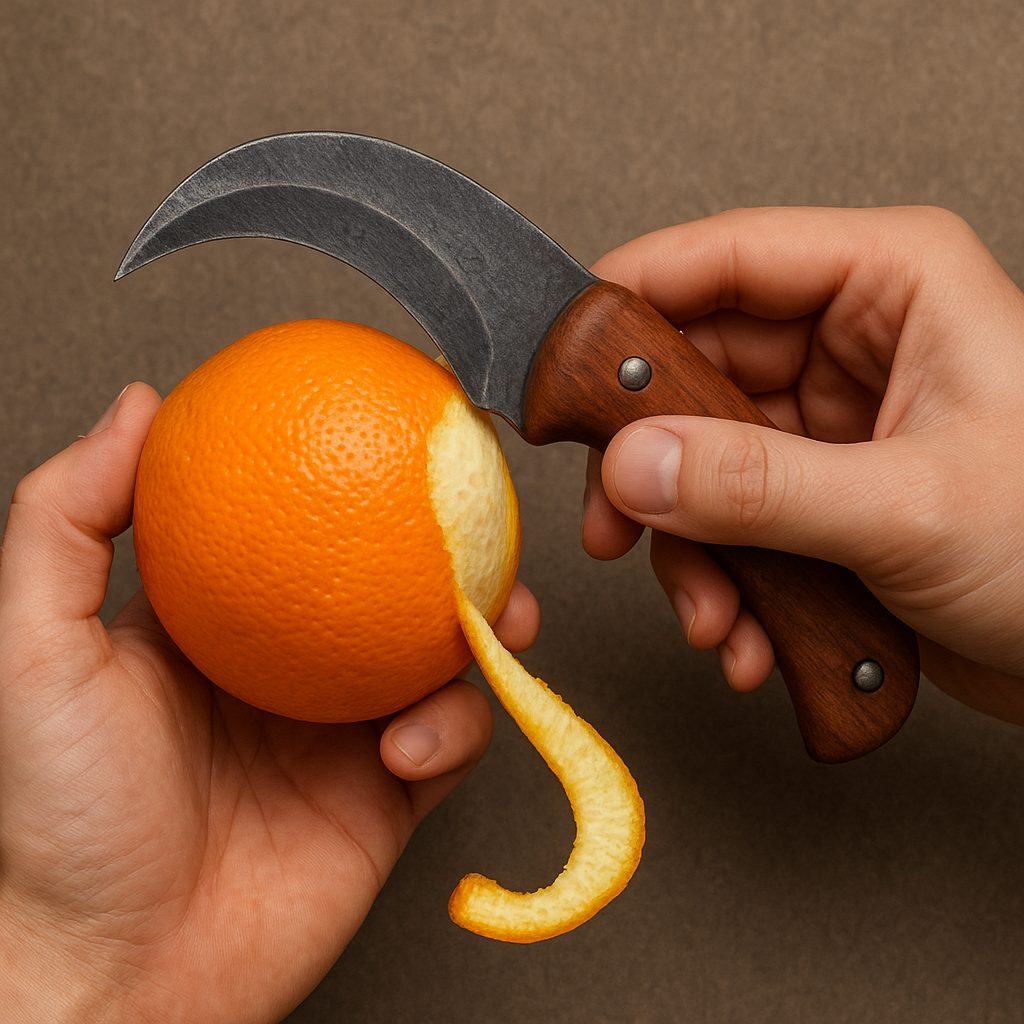
Where Curved Knives Fit in a Knife Collection
Curved knives aren’t usually the centerpiece of a knife set—but they’re often the most satisfying to use for specific tasks.
They shine when:
- Precision matters
- You’re working in-hand
- The food isn’t flat
If you’re curious to browse options, you can explore some curved knives here and see how different designs approach the same idea.
Final Thoughts
So—what is a curved knife?
It’s a knife designed to move naturally, follow shapes, and make certain jobs easier than a straight blade ever could. From paring knives to peeling knives to subtly curved chef’s knives, curved blades are everywhere once you know how to spot them.
They’re not mysterious. They’re not fancy for the sake of it.
It’s just smart design.
More questions? Read the knife masterpost 😉